




Blog
What Is a French Drain - And Why Sacramento’s Soil Makes Them Essential
A French drain is a gravel-filled trench containing a perforated pipe that collects water and carries it away from problem areas. If you've searched "what is a French drain," the simple answer is that it redirects water before it can pool in your yard or around your foundation.
That matters in Sacramento because much of the region sits on heavy clay soil. During the rainy season, water absorbs slowly and often remains on the surface long after the storm has passed. The result is standing water, soggy lawns, and moisture problems around homes.
Homeowners in Land Park, East Sacramento, Folsom, Carmichael, Citrus Heights, Elk Grove, Natomas, and Rancho Cordova frequently deal with drainage issues tied to clay-heavy soil and compacted ground. A French drain is one of the most common solutions for managing that excess water.
Schedule Online (530) 344-4515
How a French Drain Actually Works – Everything You Need to Know
A French drain relies on gravity, not pumps or complicated equipment.
The system consists of a sloped trench, gravel, and a perforated pipe. Water moves through the gravel, enters the pipe, and follows the slope toward a safe discharge location.
The slope is what makes the system work. Without proper grading, water remains trapped instead of moving away from the problem area.
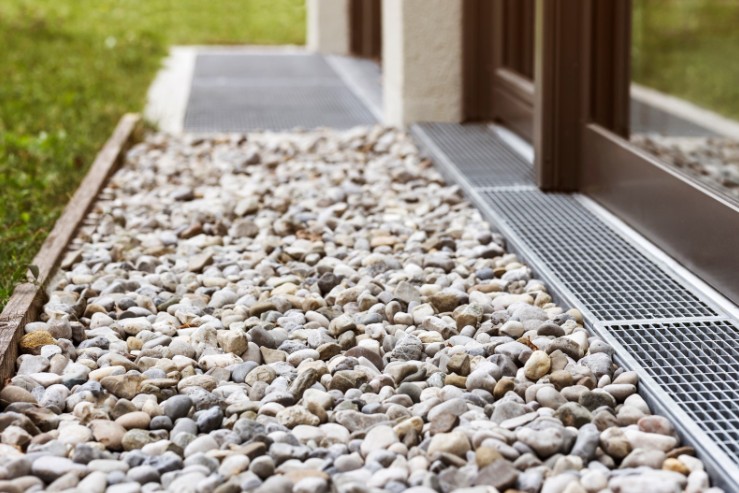
From the surface, a French drain often looks like a gravel strip, decorative rock feature, or a section hidden beneath grass.
Why Sacramento's Clay Soil Makes French Drains More Important Here
Sacramento's Soil Doesn't Drain
Much of Sacramento sits on heavy clay soil, including Vertisol-based soils that absorb water slowly and hold it for long periods. During winter storms, the soil becomes saturated quickly and water often has nowhere to go.
The Sacramento Valley's relatively flat terrain compounds the problem. Water tends to linger instead of draining naturally.
The Wet-Dry Cycle Makes It Worse Over Time
Sacramento receives most of its rainfall between November and March, followed by long dry periods through much of the year.
Clay soil expands when wet and contracts when dry. Over time, that movement can affect grading, drainage paths, and the way water moves across a property.
Neighborhoods That See This Most
Established neighborhoods such as Land Park, Curtis Park, East Sacramento, Pocket-Greenhaven, and Carmichael regularly experience drainage issues tied to mature landscaping and clay soil.
Newer developments in Elk Grove, Natomas, and North Sacramento can face similar problems because of compacted construction fill.
In foothill communities such as Folsom and El Dorado Hills, drainage challenges are more commonly related to slope runoff than standing groundwater.
Signs You Might Need a French Drain in Your Sacramento Yard
- Water remains in the same area for days after a storm.
- Sections of the lawn stay wet long after surrounding areas dry out.
- Water collects near the foundation after rain.
- Runoff creates visible erosion channels in the yard.
- Crawl space or basement moisture increases during winter.
- Downspouts discharge water into areas where it has nowhere to go.
If these issues sound familiar, a French drain installation is worth discussing before the next rainy season.
French Drain vs. Other Drainage Solutions
French Drain vs. Surface Drain
Surface drains collect water at a specific point. A French drain collects water along an entire path, making it more effective for larger wet areas.
Some drainage projects combine both systems along with drain cleaning when existing drainage components become clogged.
French Drain vs. Dry Well
A dry well stores water underground and allows it to disperse into surrounding soil. A French drain moves water away from the problem area entirely.
In Sacramento's clay soil, moving water away is more effective than relying on the soil to absorb it.
French Drain vs. Regrading
Regrading changes the shape of the yard so water flows away naturally. A French drain intercepts water and redirects it.
Is a French Drain a DIY Project?
A simple French drain can be a manageable project for an experienced homeowner. The challenge is creating the correct slope, selecting the proper materials, locating utilities, and choosing an appropriate discharge point.
Sacramento's clay soil makes installation less forgiving than it would be in sandy soil. If the project involves foundation drainage, downspouts, or water collecting near the home, professional evaluation is a good idea.
Not sure if a French drain is right for your property? Schedule a drain consultation and get a professional opinion before starting a major excavation project.
Dealing With Drainage Issues in Your Sacramento Yard? Gilmore Can Help.
Gilmore has served Greater Sacramento since 1973. If your yard is still holding water after every storm, give us a call. Our team can assess the drainage problem, determine if a French drain is the right solution, and recommend the next steps.
For drainage concerns, sewer and drain services, or general plumbing services, contact Gilmore today.
Frequently Asked Questions
A French drain is a gravel-filled trench containing a perforated pipe that collects and redirects water. Gravity moves water through the system and away from problem areas.
Yes. Sacramento's clay-heavy soil absorbs water slowly and stays saturated longer than sandy soils. Areas such as Land Park, Carmichael, East Sacramento, and Pocket-Greenhaven frequently experience drainage issues because of these conditions.
Depth depends on the drainage problem being addressed. Surface drainage, foundation drainage, and slope runoff all require different designs and trench depths.
Permit requirements depend on the scope of work and where the water is being discharged. Projects involving municipal drainage systems often require additional review. Always call 811 before digging.
Yes. Gilmore serves Sacramento and surrounding communities throughout the region, including Elk Grove, Folsom, Rancho Cordova, Carmichael, Citrus Heights, El Dorado Hills, and nearby areas.